 English
 Views: 6 Author: Site Editor Publish Time: 2025-12-17 Origin: Site
Look around the room you are sitting in right now. From the casing of your desktop computer to the intricate components inside your toaster or the body panels of your car, formed metal is everywhere. But these durable, complex shapes don't start that way. They begin as flat, unassuming sheets of raw material.
The transformation from a flat sheet to a functional product is a manufacturing marvel known as sheet metal fabrication. It is a vital process that powers industries ranging from automotive and aviation to retail and electronics. Yet, despite its ubiquity, the specific techniques used to cut, bend, and assemble these materials remain a mystery to many.
If you are looking to prototype a new design or scale up production for industrial components, understanding these mechanisms is essential. This guide breaks down exactly what sheet metal fabrication is, the machinery required to execute it, and how cost factors into the final product.
Sheet metal consists of large, thin sheets of metal—typically steel or aluminum—that act as the canvas for fabrication.
These sheets are thinner than stock bar but thicker than foil, and they are usually stored in packs according to their thickness. While dimensions vary based on the desired characteristics of the finished product, sheet metal thickness is usually below 6.35mm. Processing anything thicker than this gauge becomes difficult for standard machines, such as turret punches, to handle effectively.
Sheet metal fabrication is not a single technique but a collection of processes used to manipulate metal into a desired shape.
Depending on the required outcome, manufacturers employ a "one-stop shop" approach that includes cutting, forming, and joining. Below is a breakdown of the primary techniques used in the industry.
Process Category | Specific Technique | Description |
|---|---|---|
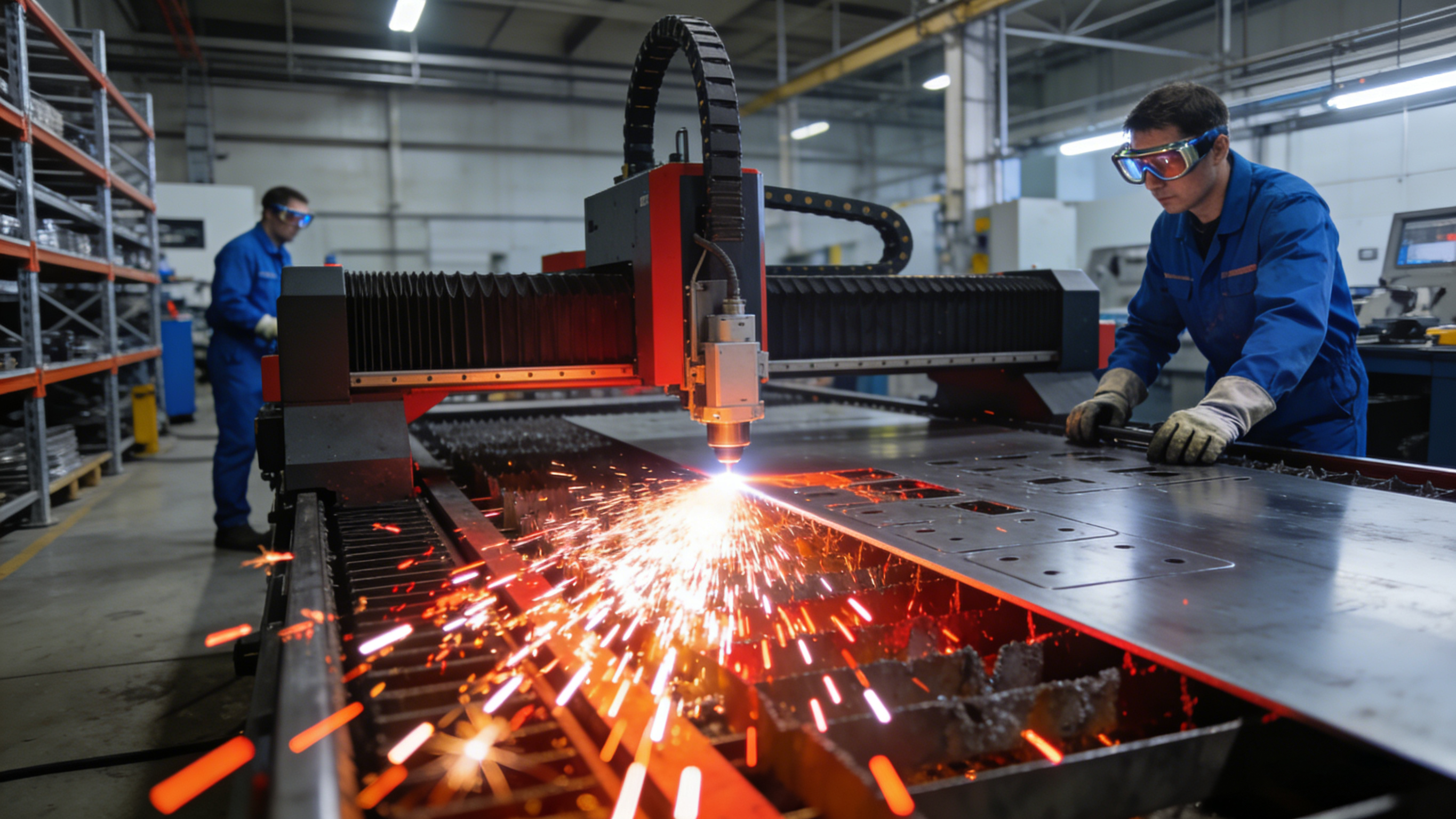
Cutting | Laser Cutting | A process used to profile a flat metal sheet. An ultra-high temperature laser follows a programmed path, piercing through the metal to leave a cut-out shape. |
Perforating | Punching | A tool is forced through the sheet at high velocity to create holes or forms. A CNC punch machine hits the sheet repeatedly to create patterns. |
Forming | Folding | A machine called a press brake applies tonnage of pressure to the sheet to achieve a desired angle or bend. |
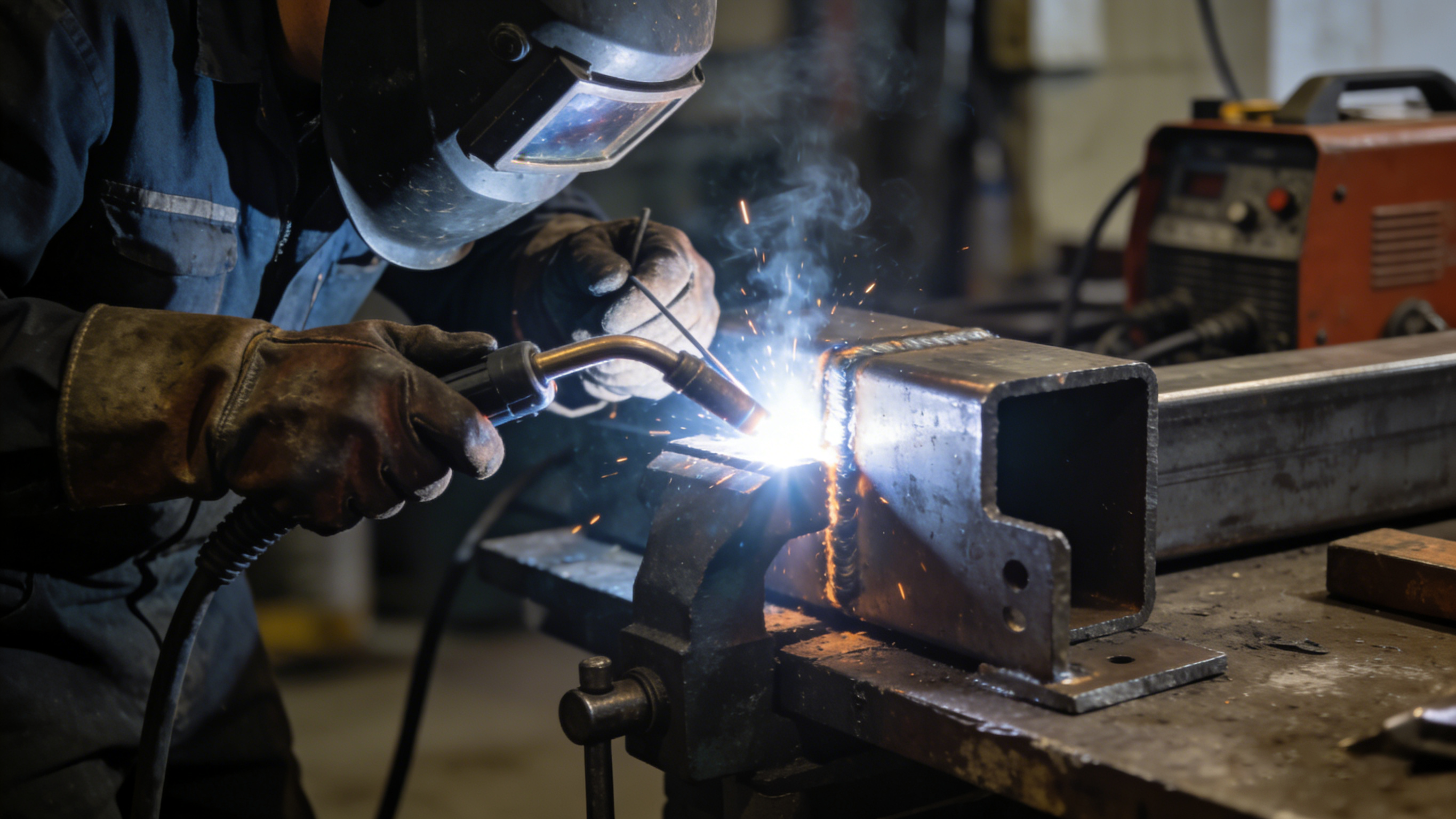
Joining | Welding | Components are fused together to form larger assemblies using MIG, TIG, spot, or robot welding. |
These methods allow for high precision. For instance, laser cutting is used to profile a flat metal sheet by "nesting" the required shape onto the material using CNC programming. The laser follows this path, ensuring minimal waste as the leftover "skeleton" is recycled.
Fabrication is highly versatile and compatible with a wide array of metals depending on the strength, conductivity, and corrosion resistance required.
While steel, stainless steel, and aluminum are the most common choices due to their structural properties, manufacturers can also process:
Brass
Copper
Tin
Nickel
Titanium
Sheet metal fabrication is often a high-volume, repeat process. Because manufacturers may produce thousands of the same product daily, the machinery used must meet three critical criteria: accuracy, speed, and automation.
Products in this sector are designed to incredibly tight tolerances. If a laser-cut profile is off by even a fraction of a millimeter, subsequent folding or welding processes will be misaligned, rendering the final product useless. Advanced facilities use high-power laser cutting machines ranging from 1500W to 10000W to ensure clean, precise cuts on materials ranging from thin sheets to thick plates.
Time is money in manufacturing. Parts must move rapidly from one processing area to the next. Modern machines, such as CNC punch presses and automated bending panels, are designed to produce parts at a rapid pace without sacrificing accuracy.
The future of fabrication lies in reduced human intervention. Automation allows for "lights out" operation—meaning machines can run 24 hours a day. Leading manufacturers have integrated fully automated machinery into their workflows, including robotic welding and robotic folding, to maximize efficiency.
The applications for sheet metal are nearly limitless. Beyond household appliances, this fabrication method is critical for creating robust industrial hardware.
Common custom products include:
Equipment Cabinets: Durable housings for sensitive machinery.
Stainless Steel Grill Enclosures: Weather-resistant covers for outdoor cooking units.
Tunnel Conveyor Parts: Components used in logistics and industrial transport.
Telecommunications Enclosures: Protective casing for IT and network servers.
Renewable Energy Storage: Housings for battery systems and solar energy racking.
1
Complexity also drives cost. A simple flat component that only requires laser cutting will be relatively inexpensive. In contrast, a complex assembly involving cutting, multi-stage bending, welding, and powder coating will naturally command a higher price due to the labor and processing time involved.
The primary difference is thickness. Sheet metal is usually below 6.35mm. Anything thicker than this is typically classified as plate metal, which requires different machinery for cutting and bending.
Yes. The process is highly efficient regarding waste. For example, during laser cutting, the waste sheet metal "skeleton" left behind after parts are cut out is recycled.
CNC stands for Computer Numerical Control. It refers to the automated control of machining tools (like drills, lathes, mills, and laser cutters) by means of a computer. This allows for the high accuracy and high speed required in modern fabrication.
Sheet metal fabrication is the backbone of modern hardware manufacturing. Whether you are building telecommunications cabinets or simple brackets, the process offers a balance of precision, speed, and scalability that few other manufacturing methods can match.
By understanding the capabilities of laser cutting, folding, and robotic welding, you can design products that are not only functional but also cost-effective to produce.
If you have a project ready for production or need technical analysis on a design, contact CNCT Metalwork to discuss how automated fabrication can bring your concept to reality.



